





Natural Retinol Alternatives: A Physician’s Guide to Gentle, Effective Skincare
If you have ever tried retinol and felt your skin sting, flake, or turn red, you are not alone. Retinol remains a gold standard in dermatology for improving the appearance of fine lines and uneven tone. However, for many people, it can also come with irritation or an adjustment period.
For those with sensitive or reactive skin, that tradeoff may not feel worth it.
As a physician, I have spent a great deal of time thinking about why we continue to ask skin to tolerate irritation in order to achieve visible results. Increasingly, patients are looking for natural retinol alternatives that support the skin barrier while still addressing concerns like texture, tone, and early signs of aging.
These ingredients are not direct replacements for prescription retinoids, but they can support many of the same visible skin concerns in a gentler way.
Why People Look for a Retinol Alternative
Most people who seek a retinol alternative for sensitive skin are not anti-science. They are simply tired.
Tired of the flaking.
Tired of prolonged irritation.
Tired of being told the reaction is normal and to push through while their skin barrier becomes compromised in the process.
Common reasons include:
-
Sensitive or reactive skin that does not tolerate retinoids well
-
A compromised skin barrier that needs support before introducing stronger actives
-
Pregnancy or breastfeeding, when retinoids are typically avoided
-
A preference for gentle, non-irritating skincare that supports the improvement of the appearance of fine lines and uneven tone
-
A desire for a simplified, barrier-supportive routine
All of these point toward the same conclusion:
effective skincare should support the skin barrier, not challenge it repeatedly.
Best Natural Retinol Alternatives
Bakuchiol
Bakuchiol is one of the most studied natural retinol alternatives. Derived from the babchi plant, it has been shown in some clinical studies to improve the appearance of fine lines and uneven pigmentation with less irritation than retinol.
A randomized, double-blind clinical study published in the British Journal of Dermatology found that bakuchiol demonstrated similar improvements in the appearance of fine lines and pigmentation compared to retinol in one study, with less reported irritation and scaling.¹
In the discussion of bakuchiol vs retinol, bakuchiol is often preferred for sensitive skin because it is generally better tolerated while still supporting visible skin improvements.
Rosehip Seed Oil
Rosehip seed oil contains vitamin A derivatives along with vitamin C and essential fatty acids. It helps support the skin barrier while improving the appearance of tone and texture.²
For those seeking a gentle skincare approach supporting the look of improved skin changes associated with premature aging, it offers nourishment without the irritation commonly associated with retinoids.
Vitamin C
Vitamin C is not a direct retinol substitute, but it addresses many of the same concerns. Clinical research suggests it can support a brighter-looking complexion, improve the appearance of uneven tone, and help defend against environmental stressors.³
Peptides
Peptides support the skin’s natural structure and are widely used in clinically formulated skincare due to their effectiveness and high tolerability across skin types. They help improve the appearance of firmness and overall skin texture over time.
Bakuchiol vs Retinol: What’s the Difference?
-
Retinol: Clinically established, but commonly associated with irritation, dryness, and peeling
-
Bakuchiol: Plant-derived, generally gentler, and often better tolerated, with emerging clinical support for similar visible improvements
For sensitive or barrier-compromised skin, bakuchiol may be a more sustainable long-term option.
Why Skin Barrier Function Comes First
From a medical perspective, the skin is not just cosmetic, it is a functional organ involved in protection, hydration, and immune response.
When the skin barrier is compromised:
-
Transepidermal water loss increases
-
Sensitivity to active ingredients rises
-
Inflammatory responses may be triggered
Supporting the skin barrier first can help improve overall skin resilience and tolerance..
A Barrier-First, Oil-First Approach to Skincare
This understanding is what led to the development of Doctor Hopiola, a physician-formulated skincare brand formulated with bakuchiol, a natural retinol alternative, for barrier-compromised skin.
The oil-first approach is designed to support the skin barrier before introducing active ingredients.
The Brilliance Oil Concentrate is applied first to help support the skin barrier with plant-based lipids and antioxidants.
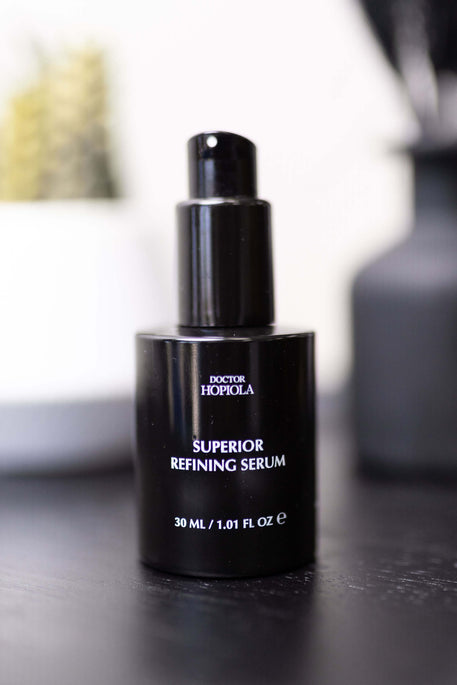
The Superior Refining Serum follows, helping to improve the appearance of tone, texture, and overall skin clarity with ingredients including bakuchiol and botanical extracts.
Together, they form a simplified, two-step system designed to support visible skin improvements over time.
Doctor Hopiola products are cosmetic formulations and are not intended to diagnose, treat, cure, or prevent any disease.
How to Build a Gentle, Effective Skincare Routine
You do not need a 10-step routine. A consistent, well-formulated bakuchiol-based skincare routine built around barrier-supporting ingredients can be more effective for long-term skin health.
Morning
-
Cleanse gently
-
Apply a barrier-supporting oil
-
Follow with a supporting serum. See example of routine here at full routine.
-
Apply sunscreen
Evening
-
Cleanse
-
Apply oil
-
Apply serum
Consistency is what supports long-term results.
Pregnancy and Retinol Alternatives
Many people seek pregnancy-safe skincare alternatives to retinol. Ingredients like bakuchiol and rosehip oil are often considered gentler options, but robust safety data is limited.
Always consult your physician before introducing new skincare products during pregnancy.
How Long Before You See Results?
Skin responds gradually to consistent care.
Some people may begin to notice improvements in hydration and texture within two to four weeks. Changes in tone and firmness may become more visible over eight to twelve weeks.
Individual results may vary.
Do You Need a Cleanser with an Oil-First Skincare Routine?
You can continue using a cleanser that works well for your skin. An oil-first skincare routine is designed to complement your existing cleansing and sun protection steps.
Doctor Hopiola is built around the two steps that play a central role in supporting the skin barrier: the oil and the serum. These can be layered into your current routine to create a more barrier-supportive, non-irritating skincare approach.
What Is Doctor Hopiola?
Doctor Hopiola is a physician-formulated skincare brand focused on natural retinol alternatives and gentle, barrier-supporting routines.
Built around a two-step, oil-first approach, the Brilliance Oil Concentrate and Superior Refining Serum work together to support the skin barrier, nourish with plant-based ingredients, and improve the appearance of tone, texture, and overall skin health.
Founded by Dr. Hope Ijaola, a board-certified physician, the brand is rooted in the belief that thoughtful skincare designed with intentional formulations for a luxurious daily practice can deliver multifunctional benefits over time.
A More Sustainable Approach to Skin Health
Effective skincare does not require ongoing irritation.
Research suggests that supporting the skin barrier while using well-tolerated, clinically studied ingredients can lead to meaningful improvements in the appearance of skin over time.
Doctor Hopiola was created with this philosophy in mind:
a simplified, intentional approach to skincare designed to visibly improve skin while supporting barrier health, hydration, and skin vitality.
References
-
Dhaliwal S, Rybak I, Ellis SR, et al. Prospective, randomized, double-blind assessment of topical bakuchiol and retinol for facial photoaging. British Journal of Dermatology. 2018.
-
Lin TK, Zhong L, Santiago JL. Anti-inflammatory and skin barrier repair effects of topical application of some plant oils. International Journal of Molecular Sciences. 2018.
-
Pullar JM, Carr AC, Vissers MCM. The roles of vitamin C in skin health. Nutrients. 2017.
Disclaimer
This content is for educational purposes only and does not constitute medical advice.


