





Natural Skincare for Mature Skin
A Physician's Guide to What Works After 40
By Dr. Hope Ijaola, Board-Certified Internist and Founder of Doctor Hopiola
Somewhere around the late thirties or early forties, most women notice their skin begins to behave differently. Products that worked beautifully for years suddenly feel heavy or cause breakouts. Skin that was once resilient now feels drier, thinner, and more easily irritated. Fine lines that used to fade overnight start to settle in. The retinol that once felt manageable may now leave your skin feeling red, dry, or irritated for longer than it used to.
As a physician, I see this transition often, and I want to share something that I think reframes the conversation in a useful way. The changes you are experiencing are not failures of your skincare. They are the natural result of measurable biological shifts happening in your skin. Once you understand what is changing, the skincare strategy that actually works for mature skin becomes much clearer.
This is a guide to natural skincare for mature skin, written from the perspective of a physician and the founder of a brand built around the principle that simpler, gentler care is often better tolerated and may produce more sustainable results over time, especially after 40.
Doctor Hopiola is a physician-formulated skincare brand focused on barrier support, natural skincare for mature skin, and gentle alternatives to aggressive anti-aging routines.
What Happens to Mature Skin After 40?
Skin in your forties, fifties, and beyond goes through several biological shifts that affect how it looks, feels, and responds to products. Understanding these changes is the foundation of choosing skincare that works.
Lipid Loss and Barrier Changes
One of the most significant changes in mature skin is the depletion of lipids in the stratum corneum, the outermost layer of the skin. Research suggests aging skin undergoes significant reductions in epidermal lipid content and barrier function, contributing to increased dryness, sensitivity, and transepidermal water loss.¹
When the lipid mortar that holds the skin barrier together is depleted, the barrier becomes more fragile. Skin loses water more easily through transepidermal water loss, and ingredients that used to feel comfortable can begin to sting or irritate.
Estrogen Decline and Its Effects
For women approaching and entering menopause, declining estrogen has a substantial impact on skin. Estrogen plays a role in supporting collagen production, skin hydration, sebum production, and barrier function. As estrogen declines, skin becomes thinner, drier, and less resilient.² Studies suggest women may experience up to a 30 percent reduction in dermal collagen during the first years after menopause with that loss correlating more closely to estrogen deficiency than to chronological age.
This is why skin can feel like it changes "all at once" in the perimenopausal years. Biology is shifting rapidly, even when chronological age is changing slowly. These hormonal shifts are one reason many women begin searching for gentler, more supportive skincare after 40.
Increased Sensitivity and Reactivity
A weakened barrier and reduced lipid content mean mature skin often becomes more reactive than it used to be. Products that contain alcohol, fragrance, strong exfoliants, or high concentrations of actives can produce stinging, redness, and prolonged sensitivity. The same retinol that once felt manageable may now feel significantly more irritating than it used.
This is not a sign that you need to push harder or layer more. It is a signal that your skin needs a fundamentally different approach.
Why "Gentler" Often Works Better Than "Stronger" for Mature Skin
There is a long-standing assumption that aging skin requires more aggressive skincare. Stronger acids. Higher percentages of retinol. More steps, more products, more actives. In my experience as a physician, this approach often backfires. The skin is more fragile, the barrier is more vulnerable, and the very products that promise to "fix" mature skin often end up making it look worse over time.
A more sustainable approach focuses on three priorities:
-
Replenishing the lipids the skin barrier has lost
-
Supporting hydration and reducing transepidermal water loss
-
Using gentler, well-tolerated alternatives to harsh actives
Each of these priorities is well-supported in dermatology research, and each can be addressed with thoughtfully chosen natural skincare ingredients.
Natural Skincare Ingredients That Work for Mature Skin
Plant-Based Lipids
Because mature skin has lost significant stratum corneum lipids, replenishing them is foundational. Research suggests that certain plant oils, including jojoba, rosehip, sunflower seed, and others, may support barrier function through their fatty acid composition and anti-inflammatory properties.³ A facial oil applied to clean, slightly damp skin may help replenish lipids and support barrier function.
Bakuchiol
Bakuchiol is a plant-derived ingredient that has been studied as a gentler alternative to retinol. A randomized, double-blind clinical study published in the British Journal of Dermatology compared topical bakuchiol with retinol for facial photoaging and found that bakuchiol demonstrated similar improvements in the appearance of fine lines and pigmentation, with less reported irritation and scaling.⁴ For women whose skin no longer tolerates traditional retinol, bakuchiol is often a more sustainable choice.
Niacinamide
Niacinamide, a form of vitamin B3, is widely studied for its tolerability across skin types and is often included in formulations designed for mature or sensitive skin.
Antioxidant-Rich Botanical Extracts
Plant extracts with antioxidant properties can help defend skin against environmental stressors that contribute to the appearance of aging. These ingredients are typically gentler than high-concentration vitamin C serums, which mature skin sometimes does not tolerate well.
Hyaluronic Acid and Glycerin
Hydrating ingredients like hyaluronic acid and glycerin support skin that looks plumper and feels more comfortable, without the heaviness that can make some moisturizers uncomfortable for mature skin.
Ingredients Mature Skin Often Tolerates Poorly
Some ingredients that work well in younger skin tend to be less well tolerated as skin ages. Approaching these with caution can help prevent irritation and barrier damage.
-
Denatured alcohol and witch hazel, which can disrupt an already fragile barrier
-
Synthetic fragrance, which is a common irritant for sensitive skin types
-
High concentrations of alpha hydroxy acids and beta hydroxy acids, which can over-exfoliate already thinner skin
-
Sodium lauryl sulfate and other harsh surfactants in cleansers
-
Traditional retinoids at high concentrations, which mature skin often no longer tolerates well
This list is not absolute, and there are situations where a dermatologist may recommend specific actives for specific concerns. But as a general guide, many people with mature skin find that simpler, barrier-supportive routines are better tolerated over time.
Building a Natural Skincare Routine for Mature Skin
A routine for mature skin does not need to be complicated. In fact, simpler, gentler care is often better tolerated and may produce more sustainable results over time because they help to reduce the cumulative stress placed on a more fragile barrier.
Morning
-
Cleanse gently with a fragrance-free, non-stripping cleanser
-
Apply a nourishing facial oil to clean, slightly damp skin
-
Follow with a refining serum
-
Finish with a broad-spectrum mineral sunscreen
Evening
-
Cleanse to remove the day
-
Apply your facial oil
-
Apply your serum
Consistency is the most important factor. Mature skin tends to respond to steady, gentle care more than it responds to intensity or constant change.
How Doctor Hopiola Approaches Mature Skin
The Doctor Hopiola Radiance Set is a two-step practice designed for women who want results without harshness. The approach reflects what I have come to believe through both clinical and personal experience: that mature skin does best with a thoughtfully simple routine, anchored in barrier support and gentle, well-tolerated ingredients.
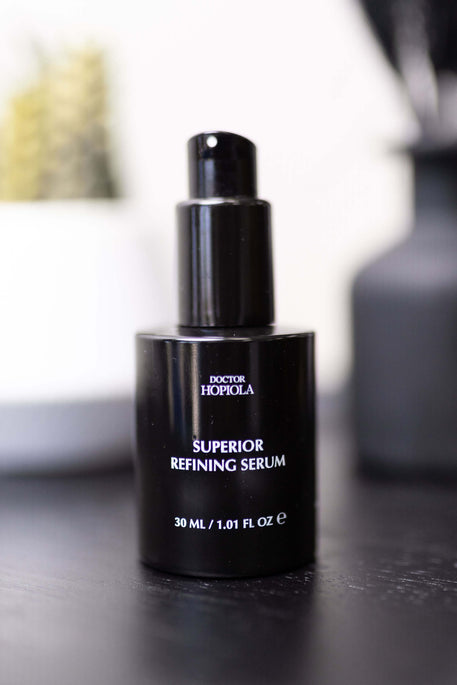
The Brilliance Oil Concentrate is applied first to clean, slightly damp skin. It is formulated with a blend of plant-based oils and antioxidant-rich botanical extracts, designed to nourish the skin barrier and improve the appearance of dry, depleted skin. The Superior Refining Serum follows and is formulated with bakuchiol and botanical extracts to help support smoother-looking, more resilient skin without the irritation commonly associated with traditional retinoids.
Together, the Radiance Set is a two-step practice that fits into mature skin's real needs: nourishment, simplicity, and gentleness. As with any new skincare product, a patch test is recommended, and individual results may vary.
Doctor Hopiola products are cosmetic formulations and are not intended to diagnose, treat, cure, or prevent any disease.
How Long Before You See Results?
Mature skin tends to respond more gradually than younger skin, but the response is real. Many people begin to notice softer texture and a more comfortable feel within two to four weeks of consistent use. More noticeable changes in tone and the appearance of firmness often become visible around the eight to twelve week mark.
Patience and consistency matter here. Mature skin builds back resilience slowly, but it does build it back when you stop fighting it.
Individual results may vary.
Frequently Asked Questions
What is the best natural skincare for mature skin?
The best natural skincare for mature skin is generally a simplified routine built around barrier-supportive ingredients. Plant-based facial oils, well-tolerated ingredients like bakuchiol and niacinamide, gentle cleansers, and broad-spectrum sunscreen are the foundation. Layering too many actives at once tends to backfire on more fragile, mature skin.
Is bakuchiol better than retinol for mature skin?
It depends on your skin. Research suggests bakuchiol may produce visible improvements similar to retinol with less irritation, which can make it a more sustainable option for mature skin that no longer tolerates traditional retinol well.⁴ Some people continue to do well with low-concentration retinol; others switch to bakuchiol and find their skin much more comfortable. There is no single answer, and your dermatologist can help you decide.
Why does my skin suddenly feel different in my forties?
Several biological shifts are happening at once. Stratum corneum lipids decline, which weakens the barrier and makes skin feel drier and more reactive.¹ For women approaching menopause, declining estrogen contributes to thinning skin, reduced collagen, and decreased moisture.² These changes often happen relatively quickly in the perimenopausal years, which is why skin can feel like it transformed almost overnight.
Do I still need to wear sunscreen on mature skin?
Yes. Sunscreen is the single most important product for mature skin, both for ongoing skin health and for the appearance of tone and texture over time. A broad-spectrum mineral sunscreen worn daily is non-negotiable.
Can a face oil really replace a moisturizer on mature skin?
For many people, yes. A well-formulated facial oil can help replenish lipids commonly depleted in mature skin and can provide the nourishment a traditional moisturizer typically offers. Some people choose to use both; others find that a thoughtful oil-and-serum routine is enough on its own.
What is Doctor Hopiola, and is it good for mature skin?
Doctor Hopiola is a cosmetic skincare brand built around a two-step, oil-first practice. The Brilliance Oil Concentrate and Superior Refining Serum are formulated with plant-based ingredients designed to nourish the skin barrier and improve the appearance of tone, texture, and overall skin health. The two-step practice is well-suited to mature skin because it focuses on barrier support and gentleness rather than aggressive actives. As always, individual skin is different, and a patch test is recommended.
A Different Way to Think About Aging Skin
The most powerful shift you can make for your skin in your forties, fifties, and beyond is to stop fighting it and start supporting it. Mature skin is not a problem to be corrected. It is skin that has earned the right to a more thoughtful, gentler practice. When you give it what it actually needs, it tends to respond beautifully.
Doctor Hopiola was built with this philosophy in mind: a simplified, intentional approach to skincare designed to support skin barrier function, hydration, and the appearance of healthy, radiant skin at every stage of life.
Disclaimer
Doctor Hopiola products are cosmetic formulations and are not intended to diagnose, treat, cure, or prevent any disease.
This content is for educational purposes only and does not constitute medical advice.
References
1. Wang Z, Man MQ, Li T, Elias PM, Mauro TM. Aging-associated alterations in epidermal function and their clinical significance. Aging (Albany NY). 2020;12(6):5551-5565.
2. Thornton MJ. Estrogens and aging skin. Dermatoendocrinology. 2013;5(2):264-270.
3. Lin TK, Zhong L, Santiago JL. Anti-Inflammatory and Skin Barrier Repair Effects of Topical Application of Some Plant Oils. International Journal of Molecular Sciences. 2018;19(1):70.
4. Dhaliwal S, Rybak I, Ellis SR, et al. Prospective, randomized, double-blind assessment of topical bakuchiol and retinol for facial photoaging. British Journal of Dermatology. 2019;180(2):289-296.


