





How To Tell If Your Skin Barrier Is Damaged
By Dr. Hope Ijaola, Board-Certified Internist and Founder of Dr. Hopiola
Most people do not realize their skin barrier has been disrupted all at once.
They notice a smaller change first.
A product they have used for months suddenly stings. The moisturizer no longer seems to last. Their skin feels tight after cleansing or looks duller than it did a few weeks ago, even though nothing obvious has changed.
These signs do not always mean your skin barrier is damaged. But when several appear together, especially after a change in your routine or environment, your skin may be asking for less.
Here is how to recognize the pattern, what to do next, and when it is time to see a medical professional.
What Is the Skin Barrier?
The skin barrier is primarily located in the outermost layer of the skin, called the stratum corneum. It is made of flattened skin cells surrounded by a lipid matrix containing ceramides, cholesterol, and fatty acids.
This structure helps keep water from escaping while limiting the entry of irritants and other substances from the environment (1).
When the barrier is disrupted, the skin may lose moisture more readily and become more reactive. Products that once felt comfortable may begin to sting, not necessarily because the product changed, but because the condition of your skin did.
What Are the Signs of a Damaged Skin Barrier?
Common signs include persistent tightness after cleansing, stinging or burning, rough or flaky texture, increased redness, dehydration that quickly returns after moisturizing, and new sensitivity to products you previously tolerated.
One symptom alone does not confirm barrier damage. The pattern matters.
Tightness after cleansing
Skin should feel clean and comfortable after washing, not stretched, gripped, or unusually dry.
Persistent tightness can be a sign that cleansing, water temperature, or cleansing frequency is removing more from the skin’s surface than it can comfortably tolerate.
Familiar products suddenly sting
A moisturizer, serum, retinoid, or vitamin C product that once felt comfortable may begin to burn or sting.
This is one of the most useful clues that your skin has become more reactive, particularly when it appears alongside redness, flaking, or tightness.
Roughness or flaking
A disrupted surface may feel uneven or develop dry, flaky areas. Flaking around the nose, mouth, or other areas where active products tend to collect is especially common.
Redness that lingers
Temporary flushing can have many causes. Redness that persists, becomes your new baseline, or is accompanied by burning deserves closer attention.
Moisturizer that no longer seems to last
Your skin feels better immediately after moisturizing, but the tightness returns within an hour or two. This may suggest that your routine is not adequately helping your skin hold on to moisture, or that an ongoing source of irritation is still present.
New sensitivity
Products, fabrics, weather, or sunscreens that never bothered you before may suddenly feel uncomfortable. New reactivity can occur when the skin’s protective function has been disrupted, although allergies and medical skin conditions can cause similar symptoms.
Dullness
When the skin’s surface becomes rough or flaky, it reflects light less evenly. The result may be skin that looks dull even when it is well moisturized.
Is My Skin Barrier Damaged, or Is My Skin Just Dry?
Dry skin and a compromised barrier are not opposites. They frequently overlap.
Dry skin generally produces less of its own surface oil and may feel tight, rough, or uncomfortable. Barrier disruption is more likely to introduce a noticeable change in reactivity: stinging, burning, persistent redness, or sensitivity to products that were previously comfortable.
|
Dry skin |
Possible barrier disruption |
|
|
Tightness |
Common |
Common |
|
Stinging with familiar products |
Less typical |
More suggestive |
|
Response to moisturizer |
Usually improves |
May improve only briefly |
|
Redness |
May occur |
Often accompanies other symptoms |
|
New sensitivities |
Less typical |
More suggestive |
|
Pattern |
May be ongoing or seasonal |
Often follows irritation, overuse, or environmental change |
Dehydration can accompany either one. Skin can also be oily and dehydrated at the same time, which is why oiliness does not rule out a barrier problem.
What Causes Skin Barrier Damage?
Barrier disruption is often cumulative. It may not come from one “bad” product or one day of overdoing it.
More often, several small stressors begin to overlap:
Too many exfoliating products
An acid toner, a scrub, exfoliating pads, and a resurfacing serum may each seem manageable on their own. Used together, they can become more than your skin comfortably tolerates.
Cleansing too often or too aggressively
A cleanser that leaves your skin feeling tight is giving you useful information. Hot water, repeated washing, and vigorous rubbing can add to the problem.
Introducing active ingredients too quickly
Retinoids and exfoliating acids are common sources of irritation when introduced too frequently or combined with other active products.
Environmental changes
Cold weather, indoor heating, low humidity, wind, and air travel can all change how your skin feels. Research has found measurable seasonal differences in stratum corneum lipids, which helps explain why a routine that felt balanced in summer may feel too stripping in winter (2).
Age
The skin’s response to disruption changes with age. Research comparing younger adults with adults over 80 found slower barrier recovery in the older group after experimental disruption (3). Practically, this means mature skin may benefit from a more measured approach to exfoliation and high-strength actives.
Can Anti-Aging Products Damage the Skin Barrier?
Retinoids and exfoliating acids can cause irritation, particularly when they are introduced too quickly, applied too generously, or layered with other potentially irritating products.
The pattern may include:
-
Burning or stinging during application
-
Redness across the cheeks
-
Flaking around the nose or mouth
-
Tightness that was not present before
-
Increased sensitivity to otherwise gentle products
If a product is causing persistent burning, significant redness, swelling, or pain, stop using it and allow the skin to settle. Do not assume that severe irritation is something you need to “push through.”
Once your skin feels comfortable again, you may be able to reintroduce the product less frequently. If the reaction returns, or if you are unsure whether you are dealing with irritation or allergy, speak with a dermatologist or another qualified medical professional.
When Should You Seek Professional Help?
Make an appointment with a physician or dermatologist if you develop:
-
Oozing, crusting, blistering, or open areas
-
A rash that is spreading or follows a defined pattern
-
Significant swelling
-
Pain rather than mild discomfort
-
Skin that feels unusually warm or tender
-
Symptoms around the eyes
-
Signs of infection
-
Symptoms that persist despite several weeks of gentle care
Eczema, allergic or irritant contact dermatitis, rosacea, and infection can resemble simple barrier disruption. These conditions require an appropriate diagnosis, not another round of trial-and-error skincare.
What Helps a Compromised Skin Barrier Recover?
The first step is usually to remove the source of irritation and give the skin a quieter routine.
Pause exfoliation
Temporarily stop scrubs, exfoliating acids, peels, and other resurfacing products.
Simplify your routine
Use a gentle cleanser, a well-tolerated moisturizer, and sunscreen during the day. If even these products sting significantly, seek professional guidance rather than continuing to add or replace products.
Use lukewarm water
Very hot water may worsen dryness and discomfort. Keep cleansing brief and pat, rather than rub, the skin dry.
Apply moisturizer while the skin is slightly damp
This gives humectant ingredients water to hold and can help reduce the tight feeling that follows cleansing.
Reintroduce products one at a time
Wait until your skin has felt comfortable for at least several days. Reintroduce one product at reduced frequency so you can tell how your skin responds.
Pay attention to the complete formula
Plant oils have been studied for their potential contributions to skin-barrier function, but their effects vary according to their fatty-acid composition, processing, formulation, and the condition of the skin (4).
The category alone does not tell you how a product will perform. The whole formula matters.
Frequently Asked Questions
How can I tell if my skin barrier is healthy?
A comfortable barrier generally tolerates your usual routine without persistent stinging, holds moisture reasonably well between applications, and does not feel tight immediately after gentle cleansing.
There is no perfect at-home diagnostic test, but a sudden change in comfort or tolerance is worth paying attention to.
What does a damaged skin barrier look like?
It may appear red, flaky, rough, or dull. Some people develop small bumps or visibly dry patches. Often, however, the first change is something you feel: tightness, burning, or sensitivity.
Can a damaged skin barrier repair itself?
In many cases, barrier function improves after the source of disruption is removed and the routine is simplified. Recovery time varies according to the degree of irritation, age, environment, underlying skin conditions, and whether the triggering exposure continues.
Is a damaged skin barrier the same as sensitive skin?
Not exactly.
Sensitive skin describes a recurring tendency toward reactivity. Barrier disruption is a change in the skin’s condition that may be temporary. The two can overlap, and naturally sensitive skin may become uncomfortable more readily when overtreated.
How do I know if my routine is helping?
Look for less stinging, less tightness after cleansing, and greater comfort between moisturizer applications. These changes may appear before visible redness or rough texture fully settles.
Should I stop using every product?
Usually, no. A gentle cleanser, a well-tolerated moisturizer, and daily sunscreen can remain in place.
Pause retinoids, exfoliating acids, scrubs, peels, and any product that clearly worsens the reaction. If your basic products also burn or sting, consult a medical professional.
Not Sure What Your Skin Is Telling You?
Sometimes the hardest part is knowing whether your skin is simply dry, temporarily dehydrated, or showing signs of a disrupted barrier.
Our complimentary Skin Barrier Assessment walks you through the same kinds of questions I consider when evaluating a routine, and helps you understand what your skin may need next.
Take the skin barrier assessment
A Simpler Practice for Skin That Needs Less
I created the Dr. Hopiola Radiance Set for people who want a more intentional routine—one that supports moisture, comfort, and healthy-looking radiance without requiring a crowded shelf.
Brilliance Oil Concentrate - Step One
A waterless blend of botanical oils and antioxidant-rich extracts that helps replenish moisture and leave dry, depleted skin feeling supple.
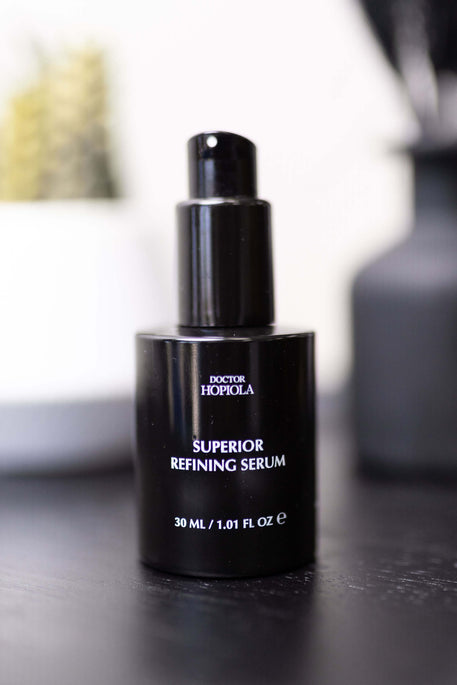
Superior Refining Serum - Step Two
A hydrating botanical serum formulated to help improve the appearance of tone and texture while supporting a soft, comfortable finish.
The Radiance Set: Both steps, together
Oil first. Then serum. Two complementary formulas, designed to work together.
If your skin is actively burning, swollen, oozing, or showing signs of a medical condition, begin with appropriate medical care, not a new cosmetic routine.
If your skin is comfortable and you are ready for a simpler, physician-formulated practice, the Radiance Set is where to begin.
Individual results may vary.
Dr. Hopiola products are cosmetic formulations and are not intended to diagnose, treat, cure, or prevent any disease.
This content is for educational purposes only and does not constitute medical advice.
References
-
Elias PM. Stratum corneum defensive functions: an integrated view. Journal of Investigative Dermatology.2005;125(2):183–200. doi:10.1111/j.0022-202X.2005.23668.x
-
Rogers J, Harding C, Mayo A, Banks J, Rawlings A. Stratum corneum lipids: the effect of ageing and the seasons. Archives of Dermatological Research. 1996;288(12):765–770. doi:10.1007/BF02505294
-
Ghadially R, Brown BE, Sequeira-Martin SM, Feingold KR, Elias PM. The aged epidermal permeability barrier: structural, functional, and lipid biochemical abnormalities in humans and a senescent murine model. Journal of Clinical Investigation. 1995;95(5):2281–2290. doi:10.1172/JCI117919
-
Lin TK, Zhong L, Santiago JL. Anti-inflammatory and skin barrier repair effects of topical application of some plant oils. International Journal of Molecular Sciences. 2017;19(1):70. doi:10.3390/ijms19010070


