





Why Is My Skin So Dry? A Physician Explains the Real Causes and How to Fix It
Learn why your skin may still feel dry after moisturizing, the difference between dry and dehydrated skin, and how to support a healthy skin barrier with a simple routine.
By Dr. Hope Ijaola, Board-Certified Internist and Founder of Doctor Hopiola
You moisturize every morning. You drink water. You bought the rich cream everyone recommended. You cut back on active ingredients. And yet your skin still feels dry. Tight after cleansing. Flaky around the nose. Dull by mid-afternoon. No matter what you apply, your skin never seems to feel truly comfortable.
If this sounds familiar, you are not alone. As a physician, I can tell you that persistent dryness is rarely a sign that you are failing your skin. More often, it is a sign that the underlying cause has not been identified. The good news is that once you understand what is actually happening at the skin level, the solution is often simpler—and more effective—than constantly searching for the next moisturizer.
In this guide, you’ll learn:
-
Why your skin may still feel dry after moisturizing
-
The difference between dry skin and dehydrated skin
-
How a damaged skin barrier contributes to persistent dryness
-
Why some rich creams don’t seem to help
-
What supports healthier, more comfortable-looking skin over time
Why Your Skin Can Feel Dry Even After You Apply Products
When skin continues to feel dry despite a skincare routine, it is rarely because you are not using enough product. More often, the products being used are not addressing the underlying cause. Your skin barrier, clinically known as the stratum corneum, is the outermost layer of your skin. It is often described as a brick-and-mortar structure, with skin cells serving as the bricks and a lipid matrix serving as the mortar that holds everything together.¹ This barrier is responsible for preventing excessive water loss and protecting the skin from environmental stressors.
When it is functioning well, skin retains moisture and feels comfortable. When it becomes compromised, water escapes more readily through a process known as transepidermal water loss (TEWL).¹ The result is skin that can feel dry regardless of how many products are applied. Common reasons skin still feels dry include:
-
A compromised skin barrier that allows moisture to escape
-
Products that provide temporary comfort without supporting barrier function
-
Drying ingredients such as denatured alcohol
-
Dehydrated skin that lacks water
-
Dry skin that lacks sufficient lipids
-
Overuse of cleansers, exfoliants, or active ingredients that disrupt barrier integrity
In other words, the condition of your skin barrier matters just as much as the products you use.Dry Skin vs Dehydrated Skin: What’s the Difference?
One of the most common misconceptions in skincare is that dry skin and dehydrated skin are the same thing. They are not.
Dry Skin
Dry skin is a skin type characterized by lower natural oil production. People with dry skin often experience:
-
Tightness
-
Flaking
-
Rough texture
-
Dullness
-
Reduced skin comfort
Dry skin is often influenced by genetics, age, and environmental factors.⁴Dehydrated Skin
Dehydrated skin is a condition, not a skin type. It occurs when the stratum corneum lacks sufficient water. Any skin type—including oily skin—can become dehydrated. Common signs include:
-
Tightness after cleansing
-
Increased sensitivity
-
More visible fine lines
-
A dull or papery appearance
-
Skin that feels dry despite producing oil
Unlike dry skin, dehydration is typically temporary and can improve when hydration levels and barrier function are supported.⁴
Can a Damaged Skin Barrier Cause Dry Skin?
Absolutely. A compromised skin barrier is one of the most common causes of persistent dryness. When barrier function is impaired, transepidermal water loss increases. Moisture escapes more easily, leaving skin feeling tight, dry, and uncomfortable—even after applying moisturizer.¹ This is one reason many people feel like nothing they use is working. If the barrier itself is compromised, simply applying more product may not address the underlying issue.Why Rich Creams Sometimes Don’t Help
The intuitive response to dry skin is often to reach for the richest moisturizer available. Sometimes that works. Often it does not. Understanding why requires understanding how moisturizers function. Most moisturizers contain three primary categories of ingredients.²Humectants
Humectants attract water into the outer layers of the skin. Examples include:
-
Glycerin
-
Hyaluronic acid
-
Urea
These ingredients help increase hydration but do not significantly reduce water loss on their own.²
Occlusives
Occlusives create a protective layer on the skin’s surface to help reduce water loss. Examples include:
-
Petrolatum
-
Mineral oil
-
Lanolin
-
Waxes
Occlusives can be highly effective for reducing TEWL, but they do not necessarily address underlying barrier dysfunction.²
Emollients
Emollients help soften skin and support barrier function by filling gaps between skin cells. Examples include:
-
Jojoba oil
-
Rosehip oil
-
Sunflower seed oil
-
Argan oil
-
Squalane
Research suggests certain plant oils may help support skin barrier function through their fatty acid composition and anti-inflammatory properties.³ A moisturizer can feel rich and comforting while still not addressing all of the factors contributing to persistent dryness. This is why some people feel coated, yet still tight underneath.What Actually Helps Skin Feel Comfortable Again
When persistent dryness is linked to barrier dysfunction, a simplified approach is often most effective.Support the Skin Barrier With Lipids
Research suggests that certain plant oils may help support barrier function and skin comfort.³ A well-formulated facial oil can provide emollient lipids that help reinforce the skin barrier and improve the appearance of dryness. This is the role of the Brilliance Oil Concentrate within the Doctor Hopiola practice.Pair Lipid Support With Hydration
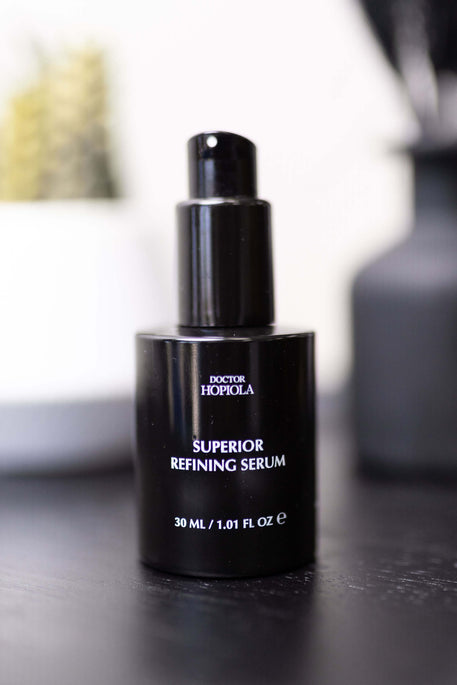
Supporting the barrier and supporting hydration are complementary goals. Humectants such as glycerin and botanical hydrators can help attract and retain moisture in the outer layers of the skin.² The Superior Refining Serum was formulated with this layering approach in mind, combining glycerin, aloe vera, snow mushroom extract, and botanical ingredients designed to support hydration and overall skin comfort.Reduce Barrier Stressors
Many people unintentionally perpetuate dryness by continuing to use products that challenge an already compromised barrier. Common examples include:
-
Frequent exfoliation
-
Aggressive retinoid use
-
Harsh cleansers
-
Denatured alcohol
-
Highly fragranced products
Temporarily simplifying your routine may help support the skin’s natural recovery process.
Be Patient
Barrier recovery takes time. Many people notice improvements in skin comfort and texture within several weeks of consistent, barrier-supportive care. More noticeable improvements in overall skin resilience often occur gradually over time. Consistency is more important than constantly changing products.
Small Changes That Can Help Support Skin Hydration
In addition to skincare products, several daily habits can support healthier-looking skin:
-
Use lukewarm rather than hot water
-
Choose gentle, non-stripping cleansers
-
Apply leave-on products to slightly damp skin
-
Consider using a humidifier in dry environments
-
Reduce unnecessary exfoliation
-
Stay adequately hydrated
-
Avoid rough fabrics that may irritate sensitive skin
Individually these changes may seem small, but together they can meaningfully support barrier function.Why I Built the Radiance Set
I built Doctor Hopiola after hearing the same frustration from women again and again: “My skin is still dry, no matter what I use.” Many had accumulated complex routines filled with products that promised hydration but never seemed to deliver lasting comfort. Others had invested in expensive creams that felt luxurious yet failed to address the underlying barrier disruption contributing to their dryness.
The Radiance Set was created to simplify that experience.
The Brilliance Oil Concentrate is designed as the first leave-on step in the Doctor Hopiola practice. It contains a blend of plant-derived oils including rosehip, baobab, argan, evening primrose, borage, sunflower seed, apricot kernel, and macadamia oils chosen for their ability to support the skin barrier and improve the appearance of dry, depleted skin.
The Superior Refining Serum follows with glycerin, aloe vera, snow mushroom extract, bakuchiol, and botanical ingredients that help support hydration while improving the appearance of skin tone and texture. Together, they form a simplified two-step practice designed to support the skin barrier while reducing unnecessary complexity. The goal is not more products. It is better support.
The Radiance Set was created to deliver the lipid support and hydration your skin needs in two intentional steps, helping simplify the path back to comfortable, resilient-looking skin.
Doctor Hopiola products are cosmetic formulations and are not intended to diagnose, treat, cure, or prevent any disease.Frequently Asked Questions
Why does my skin still feel dry after moisturizing?
A common reason is that the underlying cause of dryness has not been addressed. Barrier dysfunction, dehydration, and insufficient lipid support can all contribute to skin that feels dry despite using moisturizer.
What is the difference between dry skin and dehydrated skin?
Dry skin is a skin type characterized by lower oil production. Dehydrated skin is a temporary condition characterized by insufficient water content in the outer layers of the skin.
Can I use a facial oil if I have oily skin?
Yes. Many people with oily skin can benefit from barrier-supportive oils, particularly when dehydration or barrier disruption is contributing to skin concerns.
How long does it take for dry skin to improve?
Improvement varies depending on the underlying cause and consistency of care. Many people begin noticing improvements in comfort and texture within several weeks of following a barrier-supportive routine.
What ingredients should I avoid if my skin feels persistently dry?
Consider temporarily reducing exfoliating acids, retinoids, harsh cleansers, denatured alcohol, and other ingredients that may contribute to barrier disruption.A Path Toward Skin That Feels Comfortable Again
Persistent dryness is one of the most common—and most addressable—skin concerns. When you support the barrier, replenish lipids, improve hydration, and simplify your routine, skin often begins to feel calmer, more comfortable, and more resilient over time. If your skin has been feeling dry no matter what you use, consider whether the answer is not another product—but a more intentional approach. That philosophy is at the heart of Doctor Hopiola: supporting the skin barrier first, so healthy-looking skin can follow.References
-
Madison KC. Barrier function of the skin: “la raison d’être” of the epidermis. Journal of Investigative Dermatology. 2003;121(2):231–241.
-
Draelos ZD. The science behind skin care: Moisturizers. Journal of Cosmetic Dermatology. 2018;17(2):138–144.
-
Lin TK, Zhong L, Santiago JL. Anti-Inflammatory and Skin Barrier Repair Effects of Topical Application of Some Plant Oils. International Journal of Molecular Sciences. 2018;19(1):70.
-
Wang Z, Man MQ, Li T, Elias PM, Mauro TM. Aging-associated alterations in epidermal function and their clinical significance. Aging (Albany NY). 2020;12(6):5551–5565.
This content is for educational purposes only and does not constitute medical advice.


